
How to Standardize People Practices Across Business Units
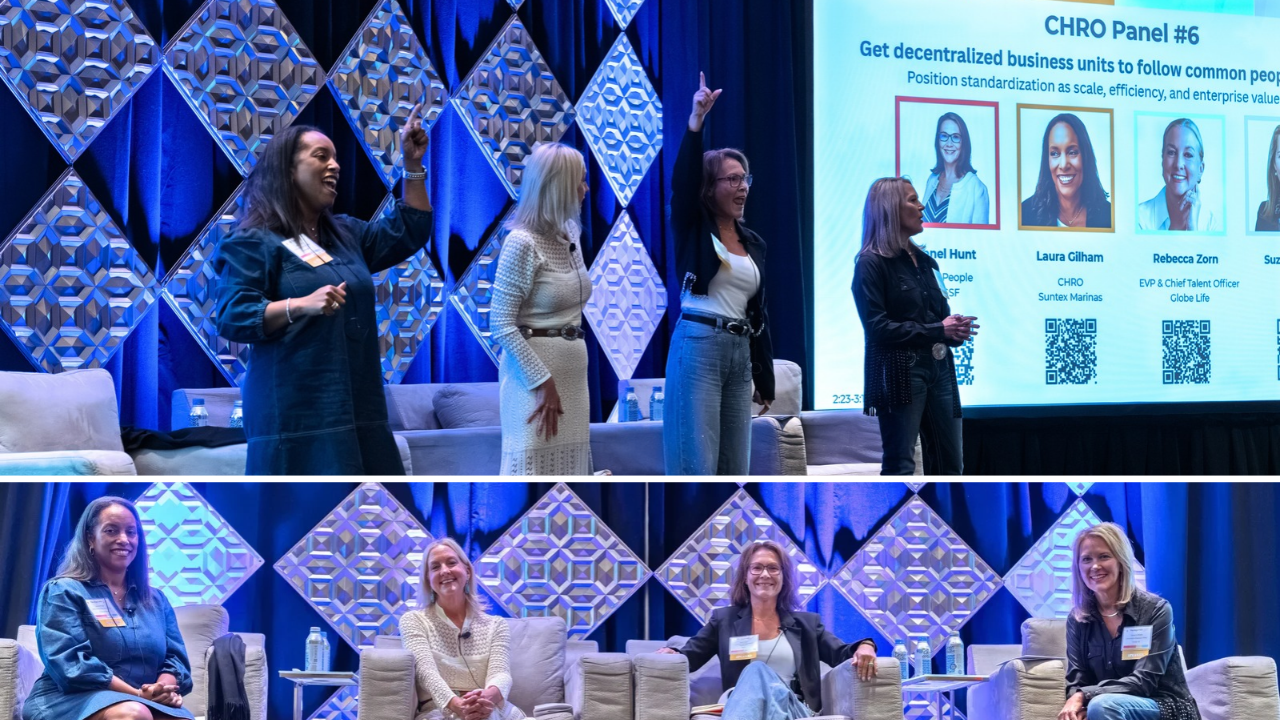
She had done this a hundred times. She knew the research, the mechanics, and exactly how to roll it out without hurting anybody's operation.
So she walked into the leadership meeting and started talking about PSL. Here's how we're going to do PSL. Here are the banks.
People started looking around the table at each other.
She kept going, because she was the expert in the room.
Eventually somebody got brave enough to ask: "Are we talking about pumpkin spice latte?"
That was the sixth and final panel at our 11th annual Big CHRO Event on September 11 in the Dallas, TX area. The panel was called "Get decentralized business units to follow common people practices," and it closed the day, which was fitting, because it was the hour about the thing every other panel had circled. How do you get people who don't report to you to do what the business needs?
Names, companies, industries, and job titles are left out below. These leaders were specific on stage because the room was safe.
What p...
How CHROs Turn Around a Struggling Business
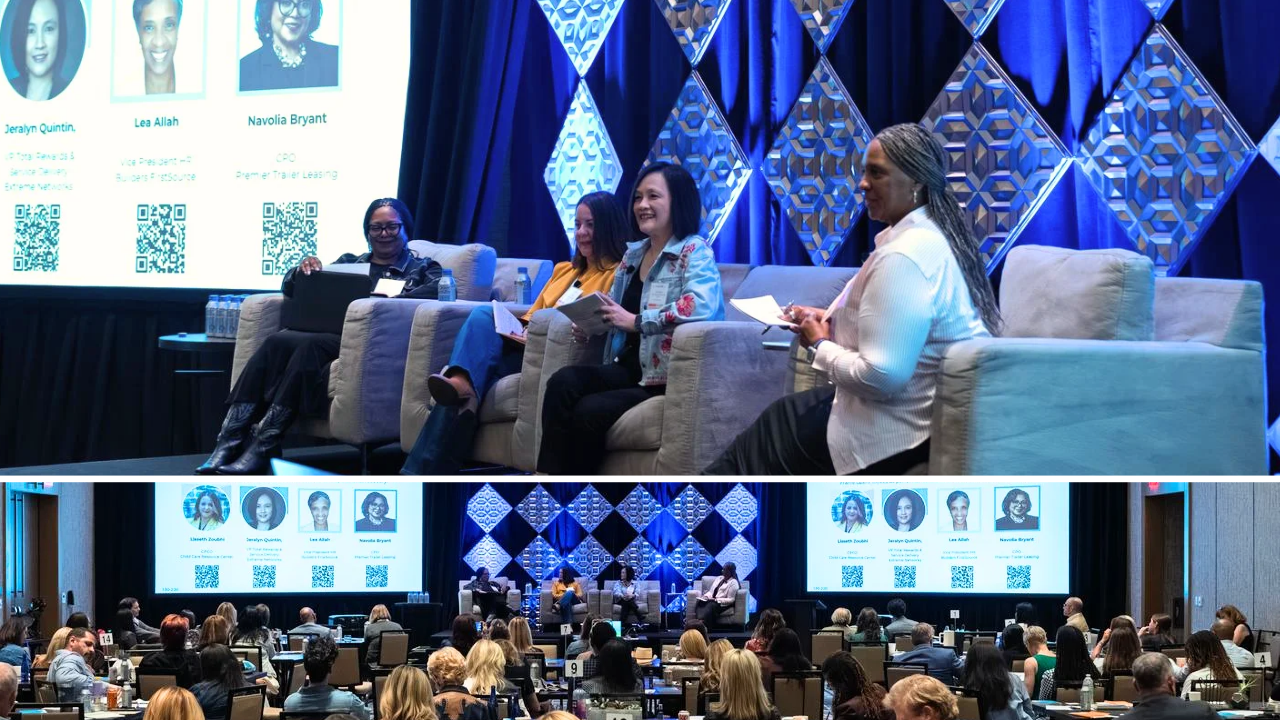
"Has anyone ever kept a leader in a critical role for too long?"
She waited, then asked again. Don't leave me hanging.
Hands went up all over the room.
That was the fifth panel at our 11th annual Big CHRO Event on September 11 in the Dallas, TX area. The panel was called "Turn around a struggling business or function through talent changes," and the panelist asking that question had thirty-plus years in HR and opened by listing the mistakes she had made rather than the wins she had collected.
Names, companies, industries, and job titles are left out below. These leaders were specific on stage because the room was safe.
How do you tell whether a struggling business has a talent problem or a process problem?
Ask one question before you do anything else: if we changed the person leading this operation, would the outcome change? If the answer is no, you have a process, capacity, or market problem, and moving people will not fix it.
Our moderator framed the whole hour around this. We...
How CHROs Take a Business Problem to the CEO
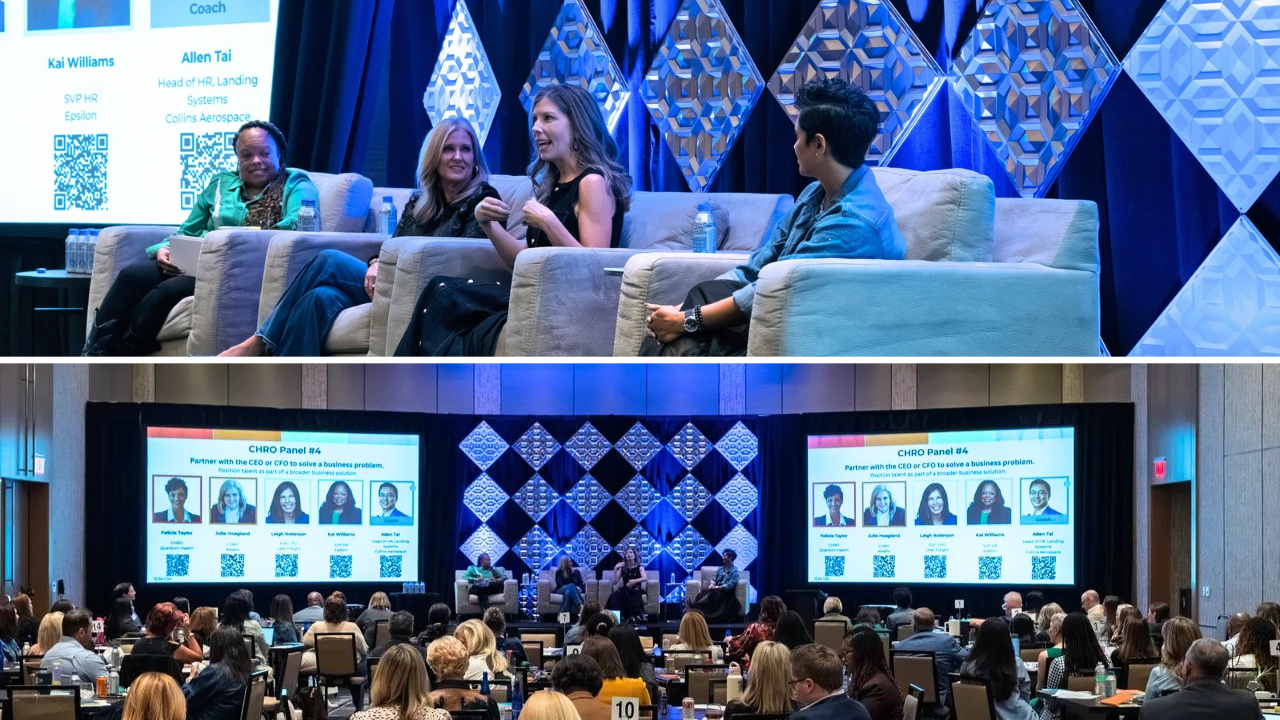
She was the only one from her team in the room.
The agenda was running early, the executives were ready, and the person who was supposed to lead the pitch hadn't arrived. So they turned to her and said go ahead.
She got through it. Then the CEO looked at her and asked whether she was proposing something that wasn't a requirement, only a recommendation, that would add millions in cost, with no way to self-fund it.
Crickets.
That story came out of the fourth panel at our 11th annual Big CHRO Event on September 11 in the Dallas, TX area. The panel was called "Partner with the CEO or CFO to solve a business problem," and it was the hour where everybody admitted what they got wrong before anyone said what they got right.
Names, companies, industries, and job titles are left out below. These leaders were specific on stage because the room was safe.
What do CEOs and CFOs actually want when HR brings them a proposal?
They want the business case, and they want to know it's been stress te...
How CHROs Connect Culture Work to Business Results
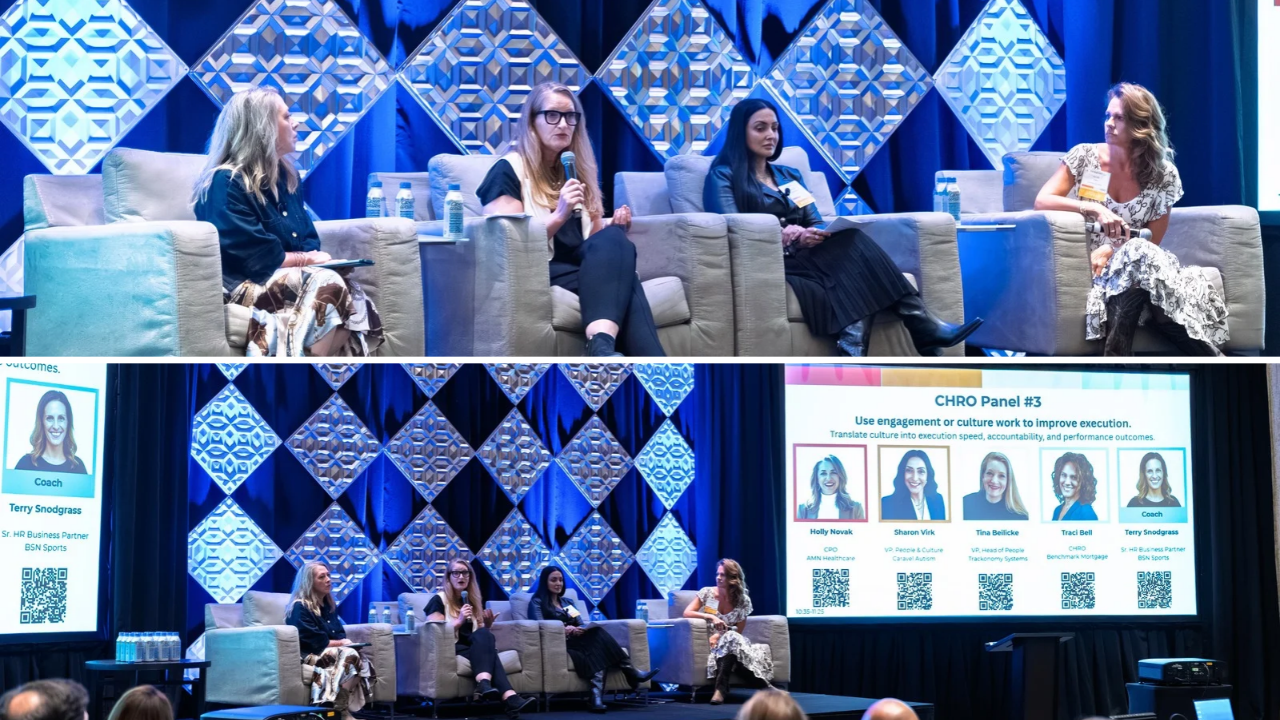
One mistake cost a company 40% of its margin.
It wasn't a technical failure. It was a manager who wouldn't say out loud that he was out of his depth, at a company whose stated values were communication and accountability.
He wasn't a bad employee. He was one of the most valuable people they had, and that was the whole problem.
That story opened the third panel at our 11th annual Big CHRO Event on September 11 in the Dallas, TX area. The panel was called "Use engagement or culture work to improve execution," and it was the hour where culture stopped being a soft topic.
Names, companies, industries, and job titles are left out below. These leaders were specific on stage because the room was safe.
Does culture actually drive business results, or is it a soft metric?
It's a business driver, and the reason it doesn't get treated like one is that most of us measure what HR does instead of what culture enables.
That's how one panelist put it, and she's been on a long personal mission t...
Succession Planning: How to Give Your CEO Real Options
Pick one critical role in your organization. If that person left tomorrow, do you have a ready now option, a ready soon option, or nothing at all?
Now the harder question. Do you actually believe your own answer?
At one company, the answer looked excellent on paper. They'd picked the successor for a critical senior role a decade before the seat opened. Years of assessment, board engaged the whole way, ten years of investment behind one person. The handoff was smooth and everyone called it a win.
Three other leaders ended up quietly carrying that part of the business for six years.
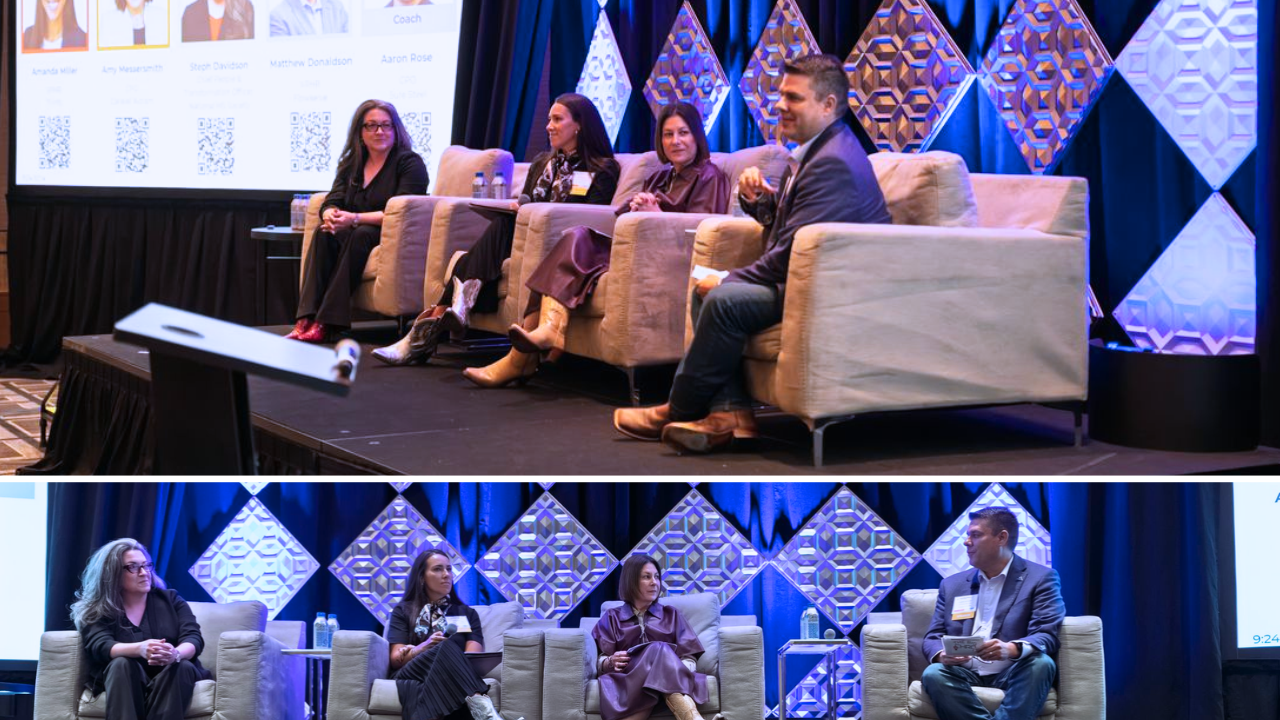
That story came out of the second panel at our 11th annual Big CHRO Event on September 11 in the Dallas, TX area. The panel was called "Build a real leadership bench so the CEO has options," and our moderator framed the whole hour in one sentence:
"Our goal is simple. How do we give our CEO and senior leaders credible board options?"
Options. Not a plan. Not a grid. Options.
Names, companies, industrie...
How CHROs Build a Business Case the CEO Will Fund
You've probably sat through it. The same line item in the finance report, every month. Everyone in the room treats it as a fact of life. That's just the way it is.
At one company, that line item said they were collecting less than a quarter of what patients owed at the front desk. One CHRO asked why it was that way, and the answer turned out to be worth eight figures a year.
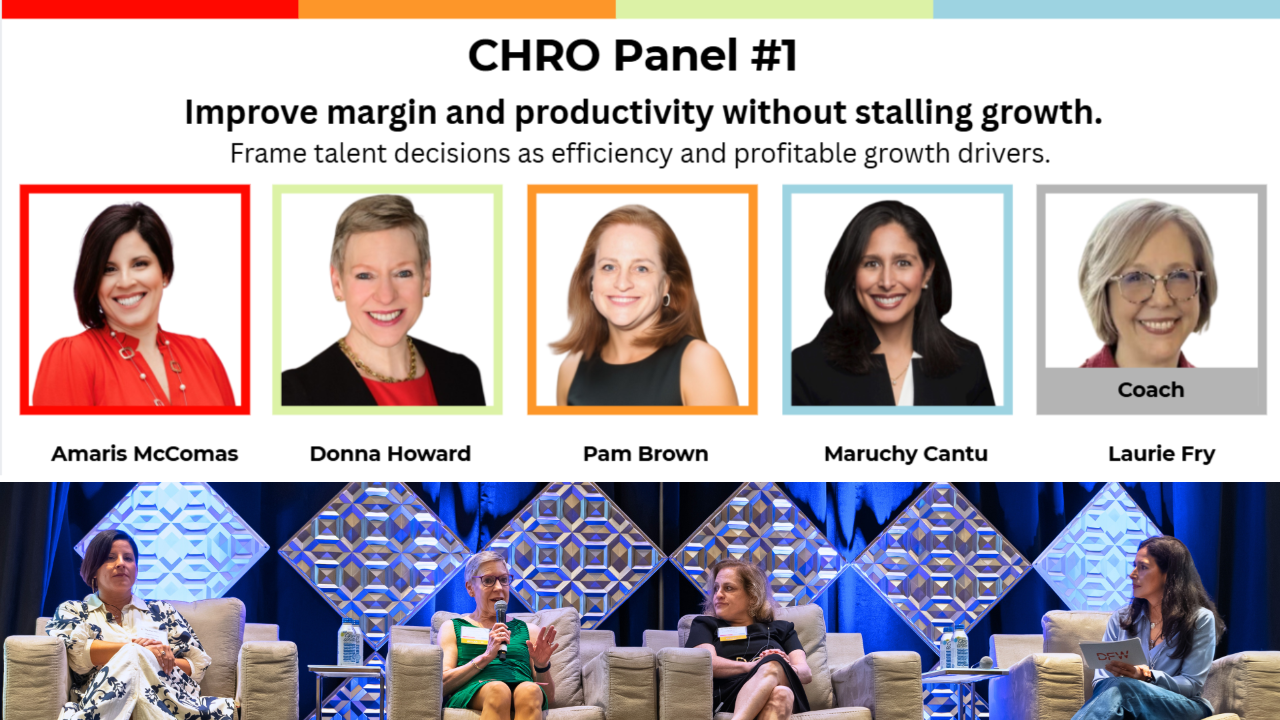
That story came out of the first panel at our 11th annual Big CHRO Event on September 11 in the Dallas, TX area. The panel was called "Improve margin and productivity without stalling growth." Three senior people leaders, three completely different businesses, and one line that tied it together:
"We're business people first. We just happen to specialize in people."
Names, companies, and identifying details are left out below, and dollar figures are written as $XX.XX million. These leaders were honest on stage because the room was safe. The lessons travel fine without the specifics.
How does a CHRO build a busi...
Miss the Big CHRO Event? Get the Free Panel Recordings

I've been listening in on rehearsals for several of the CHRO panels happening this Friday at the Big CHRO event in The Dallas TX area.
And there are so many great stories coming out of these conversations.
✨ Some will inspire you.
🔄 Some will help you position something that has been on your mind in a different way.
📖 And some will give you stories, examples, and language you can bring back to your own organization.
🎥 If you’re a CHRO or Head of HR at a company with 500+ employees and can’t join us this Friday, we’re making the panel recordings available to you for free.
🔗Take a moment to drop your information into the form, and we'll notify you when they're available.
↳ After you watch the panels - whether on your own or as a lunch and learn with your team - drop me and the speakers a note.
↳ We'd love to hear what stood out to you, what it made you rethink, and what you changed as a result.
↳ And for those joining us live this Friday, no need to fill out the form. ...
CHROs: Why Your HR Team Still Brings You Every Problem
There is a pattern I keep hearing from CHROs.
They have good people. Experienced people. People they trust.
The work gets done.
And yet, when something gets complicated, ambiguous, politically sensitive, cross-functional, or simply does not have an obvious answer, something happens.
The thinking starts rolling uphill.
Another strategic-thinking rep, another execution rep
A leader brings the problem to the CHRO.
The CHRO starts asking questions.
"What is really going on here?" "What does the business need?" "What are we missing?" "What happens if we do nothing?" "What would the CFO say?" "What is your recommendation?"
And somewhere in that conversation, the CHRO begins doing what they are very good at.
They connect the dots. They reframe the issue. They spot the business implication. They see the executive objection coming. They generate three or four ways to solve it.
The HR leader walks away with a much better answer.
And executes it.
Which seems like good leadership.
Ex...
The Missing Link in Executive Education and Why It’s Costing Companies Millions

MBA programs teach future executives how to read a P&L, model cash flow, and pitch investors, but not how to leverage HR as a growth engine.
That blind spot has a real price tag.
When leaders don’t understand how to use strategic talent practices, three things happen:
-
Businesses lose efficiency and competitive advantage.
-
Employees lose opportunities to grow and thrive.
-
CHROs lose time re-educating peers instead of accelerating impact.
It’s not a small gap. It’s systemic.
The Blind Spot in Executive Education
Business schools focus on finance, strategy, and operations, but rarely on strategic HR or talent management.
AACSB accreditation doesn’t require it either.
You can graduate from a top business program having never learned how to align talent with strategy.
The Data Is Overwhelming
McKinsey found that companies that develop and deploy human capital well are the most profitable in their industries.
Gallup shows highly engaged workforces deliver 23% h...
The CHRO’s new mandate: Why AI belongs in your job description

You may have noticed a new trend in the C-suite: companies merging CHRO and CIO roles—or giving HR formal oversight of AI strategy.
Let’s look at a few examples:
- Moderna promoted Tracey Franklin to Chief People and Digital Technology Officer after deploying thousands of ChatGPT bots and partnering with OpenAI. Their goal? Redesign jobs around what AI can do vs. what humans do best. Source
- ServiceNow introduced Jacqui Canney as Chief People and AI Enablement Officer—a title that makes it clear AI adoption is not just a tech strategy but a people one.
- ISS A/S merged its Chief People and Chief Information roles into one, appointing Liz Benison to oversee both talent and tech. The company explicitly cited the need to integrate workforce and digital strategy to drive growth.
- Covisian named Fabio Sattolo Chief People and Technology Officer, reflecting their AI-first approach to augmenting—not replacing—people in customer service workflows.
- OceanaGold tapped Michelle Du Plessi...
