
CHROs: Why Your HR Team Still Brings You Every Problem
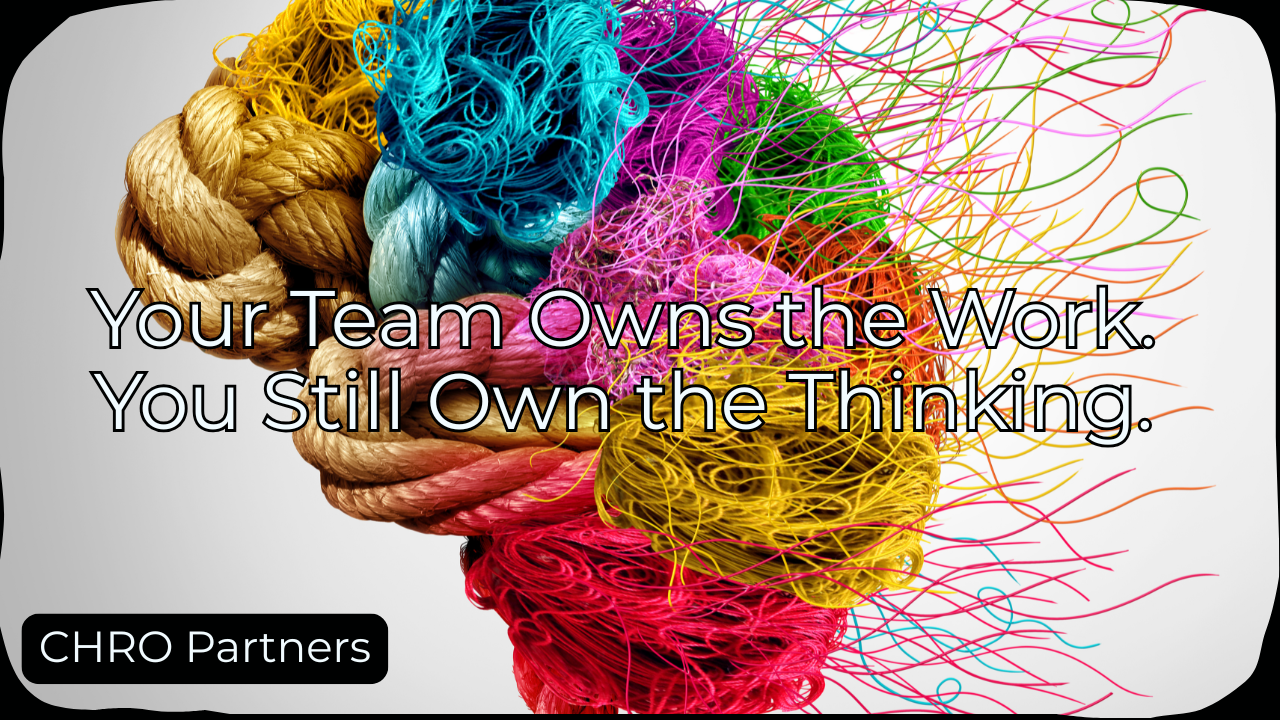
There is a pattern I keep hearing from CHROs.
They have good people. Experienced people. People they trust.
The work gets done.
And yet, when something gets complicated, ambiguous, politically sensitive, cross-functional, or simply does not have an obvious answer, something happens.
The thinking starts rolling uphill.
Another strategic-thinking rep, another execution rep
A leader brings the problem to the CHRO.
The CHRO starts asking questions.
"What is really going on here?" "What does the business need?" "What are we missing?" "What happens if we do nothing?" "What would the CFO say?" "What is your recommendation?"
And somewhere in that conversation, the CHRO begins doing what they are very good at.
They connect the dots. They reframe the issue. They spot the business implication. They see the executive objection coming. They generate three or four ways to solve it.
The HR leader walks away with a much better answer.
And executes it.
Which seems like good leadership.
Ex...
Coaching for Leadership IQ: Mark Benton, VP of Talent Management & Diversity, McKesson
In the current age of technology disruption, information is constantly changing…
Senior leaders need to make quick decisions to solve problems and create solutions. Leaders tend to rely on business acumen to reach quick answers, but it’s people who move the business forward. As talent professionals, HR has the opportunity to demonstrate their expertise for coaching people, but sometimes find:
- Influencing a leader to consider a different approach can be challenging
- HR is not valued as a consultative coach to the business
- Business leaders sometimes aren't engaged
To overcome these hurdles watch this month’s lesson on Coaching for Leadership IQ, with Mark Benton the VP of Talent Management & Diversity at McKesson.
With 20 years of experience in communicating with executives, building capabilities that translate into solutions, Mark has developed a successful framework for coaching leaders. By building trust, showing empathy, and approaching conversations from a position...
